
By Oliver Hall
Ryan Bakerink
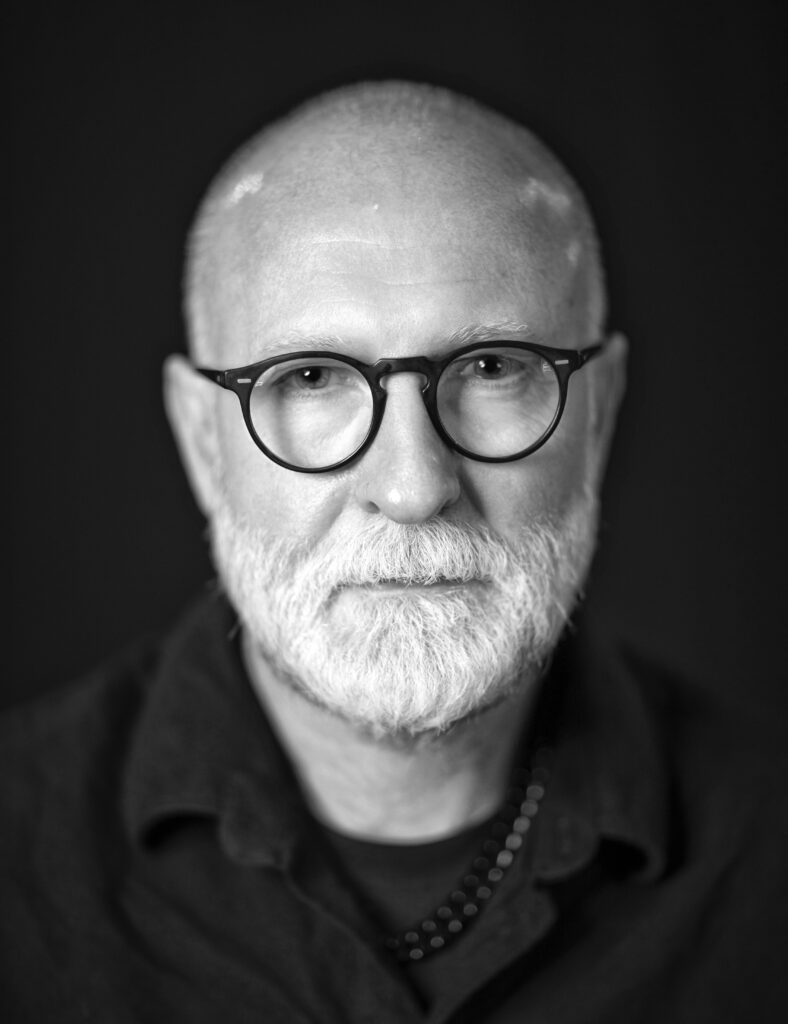
Bob Mould is no fan of band reunions. With the exception of two songs he and Grant Hart performed at a 2004 benefit for ailing Soul Asylum bassist Karl Mueller, he has studiously avoided reunions of every kind throughout his career. During the last few decades, while almost all of his contemporaries were reassembling old bands, Mould did not blink. Not Hüsker Dü, not the trio with Anton Fier and Tony Maimone, not Sugar (though David Barbe appeared briefly on Mould’s 2005 Body of Song), not LiveDog98, not Blowoff, not the band with Brendan Canty: the count was stable at zero reunions.
So, when a series of cryptic social media posts teased and then revealed Sugar’s reunion last October, more than 30 years after the band’s breakup, it came as a real surprise to everyone who might have hoped for it. The news hadn’t leaked, and it was unexpected. I nearly fainted dead away at the prospect of slam-dancing to “Fortune Teller” in a venue with other people rather than in the kitchen by myself — an option that had not appeared on life’s menu since Bill Clinton’s first term.
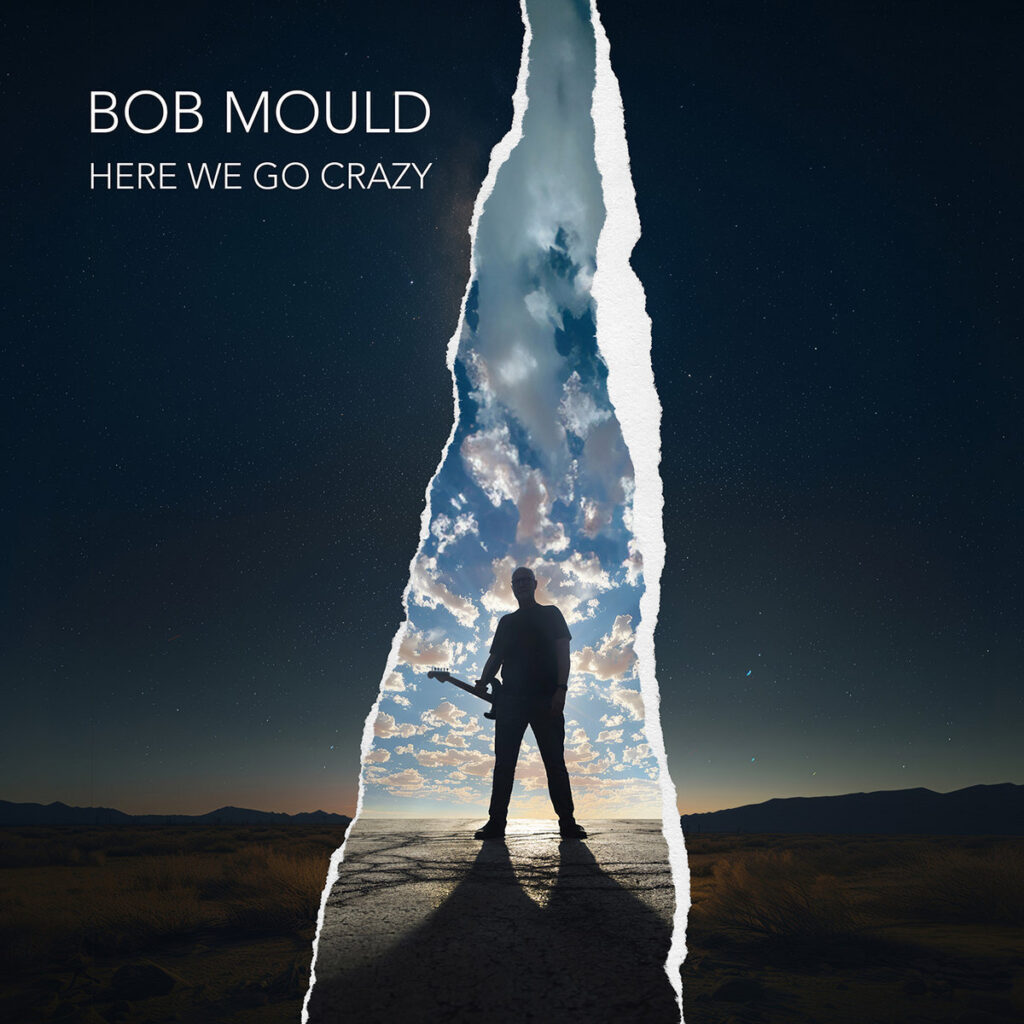
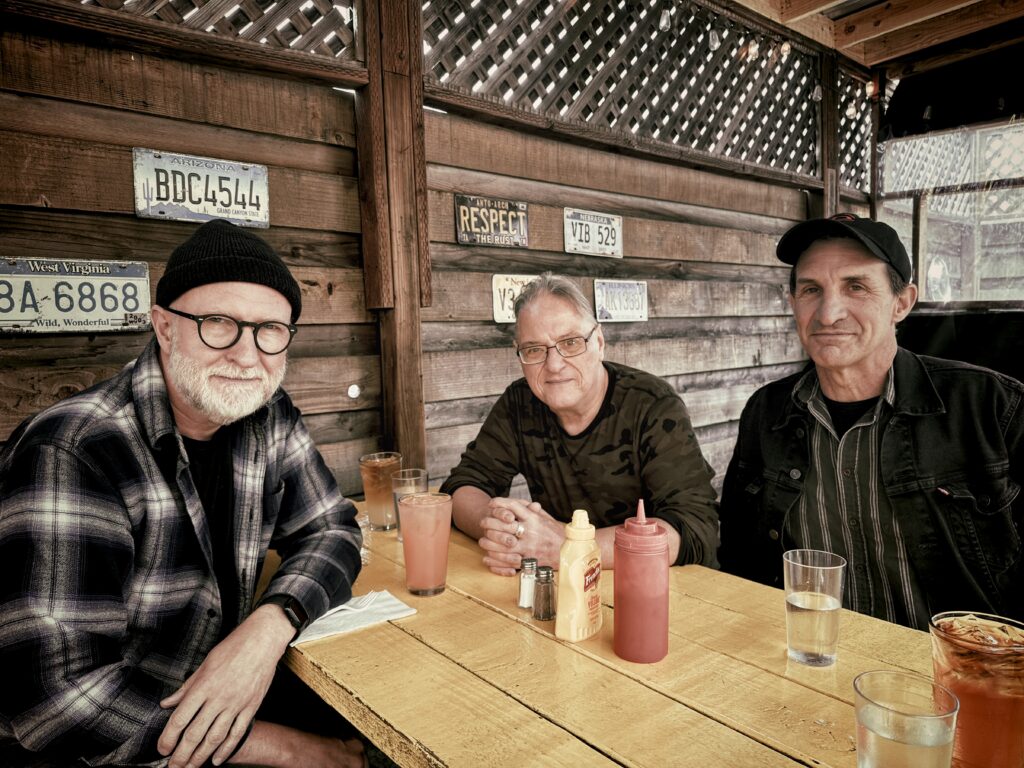
“You have no idea how torturous those months before the announce were,” Mould says, speaking from somewhere in the Southern California desert on a recent press day. For most of last year, he and the two other members of Sugar — bassist Barbe and drummer Malcolm Travis — were at pains to keep the reunion a secret. After wrapping up the tour for his most recent solo album, Here We Go Crazy, last May, Mould spirited his old group into Tiny Telephone Recording in Oakland in early June to record three new songs, as he puts it, “sneaking them in in the dead of night. I didn’t even tell my recording engineer [Beau Sorenson] what was happening. We had to just do all of this undercover. And then there was three months of setting it up, where we’re just like, dear God, please nobody find out about this, ’cause it’s so hard to keep a secret and so hard to surprise people. And I’m like, just for once in my life, can I get to surprise people?
“I paid a price though. Because as soon as it happened, like two dozen of my closest friends are like, ‘Why didn’t you fucking tell me?’ And I’m like, excuse me, I didn’t tell anybody. You have no idea what lengths I went to to not tell anybody. So I’m repairing all of those friendships still,” he says, which makes us both chuckle.
The adjective “melodic” has seen heavy service in descriptions of Bob Mould’s work and, to be sure, he is a gifted melodist. But so much of the pleasure and richness of Sugar’s music resides in the harmonies of the layered vocals and superimposed guitars and keyboards and in the textures that emerge from judicious but extravagant use of distortion and volume. The sunniness of Sugar’s catalog can be overstated, as if the group merely sounded like “Chewy Chewy” at 130 dB. In fact, the sting of death awaits every Copper Blue listener on “The Slim,” one of Mould’s most sharp-edged songs. Sung from the point of view of someone whose partner has died of AIDS, it addresses the departed with a mixture of rage, grief, and terror. And while “JC Auto,” a song Mould has apparently not played in years because it shreds his voice every time, is often taken as the eyewall of the hurricane that is Beaster, that judgment passes too swiftly over the bludgeoning “Judas Cradle,” named for a medieval torture device said to have been used especially to punish homosexual acts.
With Hüsker Dü and two solo albums for Virgin in the rearview, Mould assembled Sugar in late 1991. He had written some 30 new songs and secured record deals with Creation and Rykodisc for a planned third solo LP. For the rhythm section, he recruited two musicians who had never met, let alone played together: Malcolm Travis, drummer in two related Boston bands, Human Sexual Response and the Zulus, and David Barbe, a bassist with a sweet tenor voice who led Athens, Georgia’s Mercyland. (While most of Sugar’s writing credits are Mould’s, Barbe’s songs make up a small but beloved share of the Sugar catalog.) The trio took its name from a single-serving packet on a Waffle House table shortly before its live debut at Athens’ 40 Watt Club in February ’92.
The albums followed in quick succession: Copper Blue (1992), Beaster (1993) and File Under: Easy Listening (1994), each one a safe, legal stimulant in brightly colored packaging, often filtered through the coke bottle green of a Rykodisc jewel case or cassette case. The singles, inexplicably backed by songs other bands would have proudly etched on A-sides (“Needle Hits E,” “Going Home,” “Mind Is an Island,” “Where Diamonds Are Halos,” etc.), established themselves as necessary and integral parts of the Sugar oeuvre. The trio played at deafening volume for about four years and then abruptly split up, leaving behind the B-sides compilation Besides (1995) and a live CD, The Joke Is Always on Us, Sometimes.
“With Hüskers, we grew apart. With Sugar, it was a lot of work. And then it just went.”
Conceding that the first reunion of his career carries some weight, Mould seems to relish the idea of playing in Sugar in 2026. “I think with Sugar, the three years that we were together in the ’90s, it was so much work. I personally never found a moment to enjoy any of it. It was just really hard work all the time and constant touring, constant writing and recording. And then it was over.
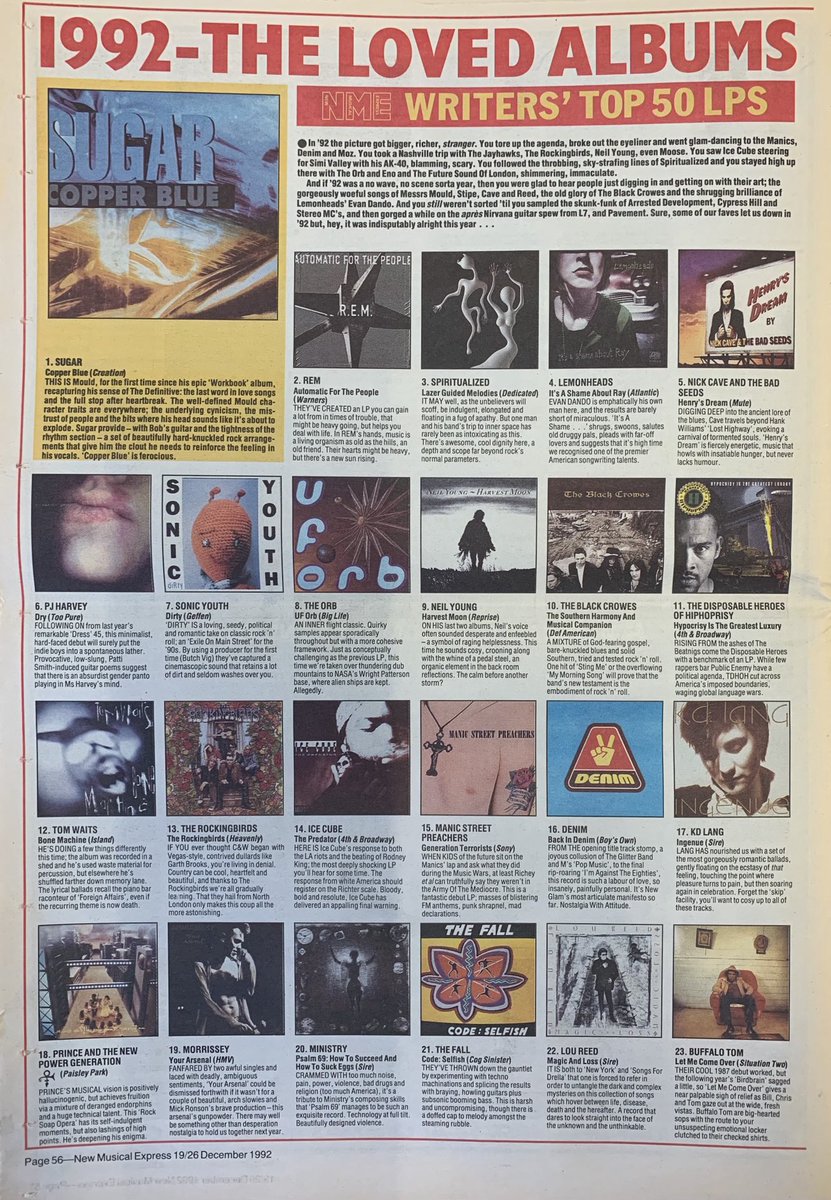
“So one of the key things coming back to it is I don’t have the pressure of having to write a whole album. We don’t have any pressure of a previous record being album of the year by NME or any of that. You know, we’re just revisiting a body of work that we did decades ago. And the only pressure is, I think, to have fun. So that’s how I’m going into it.”
When I suggest that Sugar might have lasted longer if Copper Blue and Beaster had been less successful, Mould is quick to accept his share of responsibility for the pressures on the band. “After Copper Blue and Beaster did what they did, and it was the fall of ’93 — I think at this point, we’d finished up the Europe festival run — I spent close to a month producing a Magnapop record. Rykodisc, which was the American component of the record deal, parallel to Creation in the UK, had been restructuring the company, I think, in hopes of capturing a bigger audience for Sugar. And I had about three months to write a follow-up to those two records. And that, in hindsight, wasn’t enough time.
“So that was at my own hand. That was not anybody telling me I had to do it. That was me thinking, got to keep this moving.
“[In] ’94, we went to Atlanta and spent weeks trying to get a record done and nothing of use came of it. And then we started over in Austin, Texas, and got a record recorded and then immediately got right back on the road with big rooms, big expectations. And, you know, David’s home life had changed. I think he had just become a dad for the second time, second child, and he really needed to go back and be with family, and I was pretty burned out.
“So if there was any pressure, it would have been self-applied. But things outside of the three of us were changing as well. And that can do a number on a band. That’s usually a good time to stop. Even if I think back to the last 18 months of Hüsker Dü, there was a fair amount of attention put on a band where the three members were growing apart at a pretty fast clip. So, yeah, bands ending, there’s like a handful of ways they end.”
“With Hüskers, we grew apart. With Sugar, we just… it was a lot of work. And then it just went.”
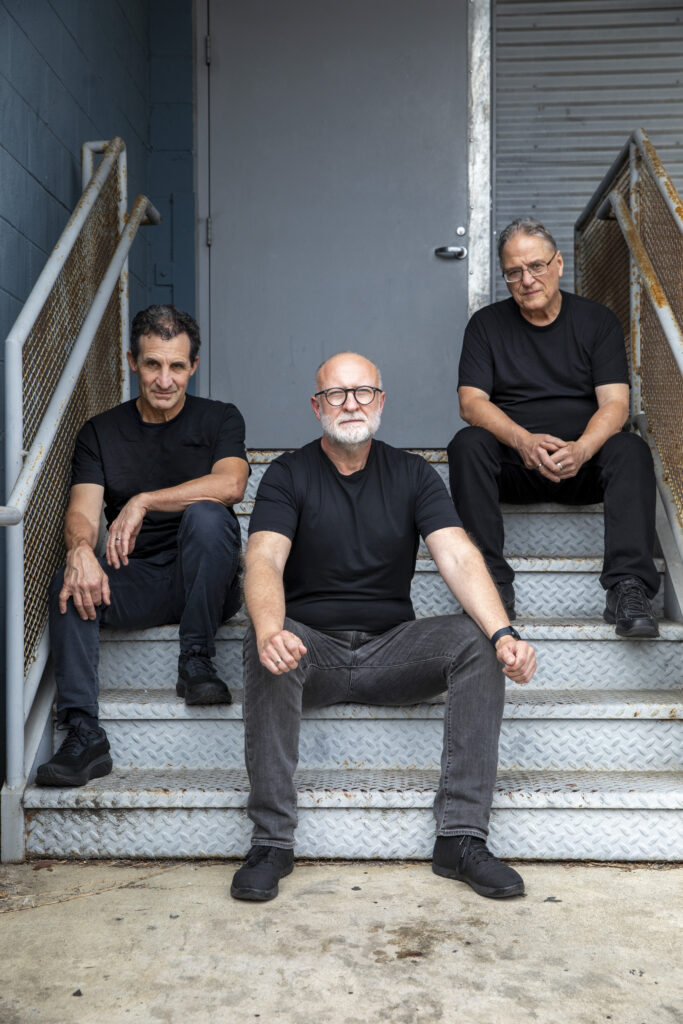
In 2011, Mould, Barbe, and Travis met up and played some songs, but “it didn’t feel like the right time,” Mould says. Then, about two years ago, the ambient temperature changed. “I was starting to sense there was a lot of interest in the band, whether it was social media or venues and promoters, [a] new record company. I could just sort of feel that people are really interested in Sugar. I was a little resistant, but then I started looking at other people coming to me with, ‘This band meant a lot to us, if you have ever thought about it.’ And then [I] just brought it to David, and we talked about it, and then we took it to Malcolm. That was at the beginning of ’24. So sometimes the outside forces start to all lead in one direction.
“That was the beginning of considering it, and then we got together to play in October ’24, and we had a really good time. And then, in the back of my mind, I was like, Well, maybe I should go back to some of these people that were interested and see if they’re still interested…”
If the form of Sugar’s new songs expresses some nostalgia, their content disavows it. Mould wrote “House of Dead Memories,” the first of the new Sugar songs to be released, in 2011, the year he published an autobiography, See a Little Light, and was the subject of a career retrospective tribute concert at L.A.’s Disney Hall. Copper Blue was on his mind, since its twentieth anniversary was approaching, and he was working on songs that would become Silver Age (2012), an album he envisioned as a companion piece to Sugar’s debut. While the lyric could plausibly describe a personal relationship, it’s considered to be a message from artist to audience, one that holds up a mirror to rock fandom’s insatiable greed:
I gave you years of my life
But you always wanted more
I turn coal into diamonds
You always wanted more
There’s a limit to what I can do
“Long Live Love,” with its heart-squeezing chords and melody, dates from 2007, when Mould was living in D.C.; like “House of Dead Memories,” the song discourages a mawkish view of the past: “When memory lane is paved with broken glass/Don’t be leaving the house without your shoes intact,” it begins.
“It also feels like a Sugar song,” Mould says. “In my songwriting, there’s a handful of different styles that I can lean on, and Sugar has always been one of those styles, ever since Copper Blue came out. It’s been funny going back and relearning these songs and putting them in a framework. I’m like, Oh God, this is where I started this. This is where I started this thing that I still do. If it’s chord positions or voicings, you know, when I start touching some of the old songs that I haven’t touched, I’m like, Oh wow, okay. So this is where I started this.”
The three songs Sugar recorded in Oakland last summer — the two mentioned above (both available streaming and on an upcoming single) plus an unnamed third song that remains unfinished — are the first the band has ever recorded “on the floor” in the studio with basic tracks performed by the whole band together. (Every part on Sugar’s previous studio recordings was tracked separately, starting with drums.)
“If you think of that process and then go back and listen to those records, you’ll understand why they sound the way they do,” Mould says. “Sugar is much more of a machine, like a rhythmic machine that moves at a constant rate, versus Hüsker Dü, which was three jet fighters racing to be first, or me, Jon [Wurster], Jason [Narducy], where it’s neither Hüsker Dü nor Sugar. It’s yet a different iteration of how a power trio works. I think me, Jon, Jason color outside the lines of a little bit more than Sugar, and Sugar was much stricter than Hüsker Dü. Anton-and-Tony was yet again completely different. Anton was an amazing player, but I couldn’t budge him. It was like trying to drag a tanker. I couldn’t move it.
“So I was like, well, what’s another way to get this done? Malcolm was amazing on all the records, but with Copper Blue and Beaster stuff, he just committed the arrangements to memory and would play with the least amount of guide guitar. It’s a fascinating way to make records, and it gave us a great result. Once we had all the drums set exactly as they should be, it’s like building a house. Once you get the foundation that firm, you can put anything on top of it, and it will hold. Copper Blue and Beaster are the densest records I’ve ever made in terms of layers of guitars, layers of double-, triple-tracked vocals, layers of synthesizers and percussion. Building it from the basement up, it’s a way that, at least with those records, I was able to pile so much stuff on top of it. So that’s the secret sauce on those.”
I ask if there are any unreleased outtakes or unrecorded songs from the ’90s, such as “The Right Words,” a song that appeared on some early setlists. “That would be the first one I would mention, yep. ‘The Right Words’ was a great song, and I’m glad you mentioned it, I was just about to say it.
“I’d have to dig out all of the original tapes to see what else, but there’s probably a handful that haven’t seen the light of day. I can’t vouch for any of them because I actually can’t remember them.”
Sugar’s repertoire did not include any Hüsker Dü songs or any material from Mould’s solo records, and that will continue on the upcoming tour, he says. “Sugar is Sugar, and the Sugar setlist will be Sugar. There might be one or two covers. There will not be Hüsker Dü covers and there won’t be solo. No, it’s the three original records and the associated B-sides and occasional covers we played then, plus the two new songs you’ve heard. And if I can get the third one cleaned up and finished, maybe we’ll play that one, too.” He doesn’t absolutely rule out the possibility of playing his blue Stratocaster, though he says he hasn’t played it in years and it would need work: “If I’m thinking of using a blue Strat on this tour, I better get it in the shop soon.”
As for loudness, the live shows may not be quite as earsplitting as before, but you should probably still bring earplugs. “I don’t know if anything could be as loud as Sugar was back then,” Mould says. “That was like stupid loud. I mean, my hearing is not what it once was. I’m a fair bit older, and I know what the volume does to me on a nightly basis. Sure, I mean, if the PA is willing, it’ll be pretty loud. At my mic position, I don’t think it’ll be quite as loud as it was in the ’90s because I don’t think I could take it. But I’m hoping it’ll be loud. I’m hoping it’ll be physical. If we can get anywhere close to what it was in the ’90s, it’ll be way louder than anything else in 2026.”
When we spoke, Mould was a few days away from joining the Suicide Commandos onstage for their farewell concert at Minneapolis’ First Avenue. The teenage Mould, who recalls himself as “a Trouser Press, Creem, Circus, Rock Scene kind of kid,” came across a photo of the Commandos in Rock Scene as he was preparing to move to Saint Paul to attend Macalester College. He bought Make a Record, the Commandos’ lone studio LP, on Blank, and arrived at Macalester in time to catch the band in concert “a handful of times” before they broke up in November of ’78. Two months later, he took two guitar lessons from Commandos guitarist and singer Chris Osgood, who concluded the second by telling Mould to start his own band. (Significantly, the “America Underground” scene report on Minneapolis in Trouser Press 53 contains the magazine’s first mention of Hüsker Dü and its last mention of the Suicide Commandos.)
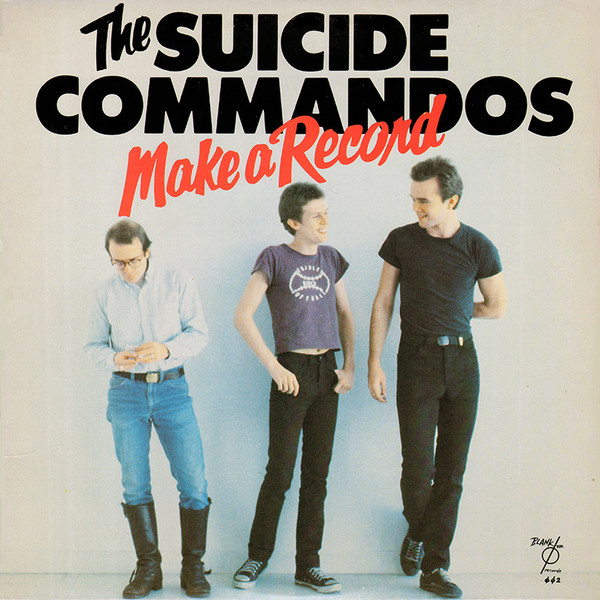
“There were other Minneapolitans who studied under Chris,” Mould says, “Dave Pirner from Soul Asylum and Craig Finn from the Hold Steady.” I ask whether, at this remove, he can remember what Osgood taught him. “No, I was just pretty awestruck. It was more like guidance counseling than it was specifically, here’s a Gsus9 or whatever. It was sort of, ‘keep your gear in shape, don’t let your cords get tangled,’ that kind of stuff. Infinitely more helpful than a Gsus9.”
As the interview is wrapping up, I confess that I didn’t fathom the true heaviness of “Judas Cradle” until a few years after the release of Beaster, when I saw a real Judas cradle on display at the Torture Museum in Amsterdam. Mould says he learned about the device at the same place, adding: “That song sounds like it looks. I don’t know how it feels, but I know how it looks.”
Under some public pressure, Mould came out as gay towards the end of Sugar’s run in a 1994 feature by Dennis Cooper in Spin. I say what I would have liked to have told him if I’d had the opportunity as a teenage fan: that, in Sugar at least, I thought he was actually pretty candid about his sexuality in his lyrics, and while I understood and sympathized with the reasons some people had for pressuring him to come out, it also felt like an invasion of his privacy.
Though he calls himself “a student of the Pete Shelley school of songwriting, where if it’s gender neutral, it’s just a love song,” Mould doesn’t entirely disagree about how his orientation came through in Sugar — he cites the music video for “If I Can’t Change Your Mind” off Copper Blue, which pictured gay, lesbian and straight couples, and ended with Mould holding up a Polaroid of himself and his then-partner with the Sharpied message “THIS IS NOT YOUR PARENTS’ WORLD” — but declines to point a finger at anyone about his coming out, stressing instead how uncomfortable he was with himself when he was younger.
“Spin gave me an opportunity. Dennis Cooper is a good guy, and he came and spent a couple days with me and my then-partner down in Austin, Texas, and we had a good time. Even with the [Spin] article coming out in ’94, I still had discomfort with myself, not with how Dennis portrayed me, and not the platform that Spin gave me, but still feeling like ugh. And you know, I think it was a pretty big open secret.
“Hüsker Dü, back in the ’80s, we did what we could to help raise money for causes that helped people with AIDS. But it wasn’t my business. It wasn’t my flag, right? Jimmy Somerville, it was his flag, and it was so cool and important. There were people who did the hard work that I sort of neglected. But yeah, ’94 came and went and blah, blah, blah, and then it was a thing.
“And once I got more comfortable, especially in the late ’90s, when I came back to New York and threw myself into the West Village, and into Chelsea, and into the clubs, and into house music, and started really becoming active in the community, and started learning where my place was in the community and how I could help, then I felt much more comfortable with everything.
“But, you know, it’s a process. For me, in 2020 with Blue Hearts, it was like, well, let’s see if I can rail against the establishment and try to make up a little bit for the things that I maybe could have done better in the ’80s.”
I mention Blowoff, the dance party he and Rich Morel hosted in the early 2000s. Did it really draw 15,000 people?
“Well, the 9:30 Club, we had 1,500 every night. We’d have about 15,000 over the course of a year. But yeah, I mean, that was the 2000s for me. It was living in New York and getting in the gay life and then moving to D.C., which is an incredibly gay town and probably still is, given that the military’s there and all that. You know, don’t tell MAGA!
“In the aughts, it was W., it was Iraq, it was we gotta make our own party here, and it was a smart gay bear party that played great music, and Rich and I wrote a record. And I mean, it was an amazing 11 years of my life, to be able to be so deep in the community and to give back to the community and give people a place to gather and be smart with the music and the visuals. That was just such a great decade for me. And it’s funny, for the Sugar fans or the Hüsker Dü fans, a lot of them were gay, and they showed up at Blowoff and it really brought it all full circle.
“And you’re surprised at how big it was. I think there’s like an entire portion of people who have followed my work that haven’t put that piece in the right place yet, how fulfilling it was for me. And it was just great to be part of the community and to integrate music, because I kept all of that separate before then.”
Sugar’s reunion tour starts in May with sold-out engagements at New York City’s Webster Hall and London’s O2 Forum Kentish Town. The band’s website is www.sugarcopperblue.com.